EnglishEnglish▼
着 marks ongoing action
- Traditional
- 著
Stroke order
着 is written in 11 strokes.
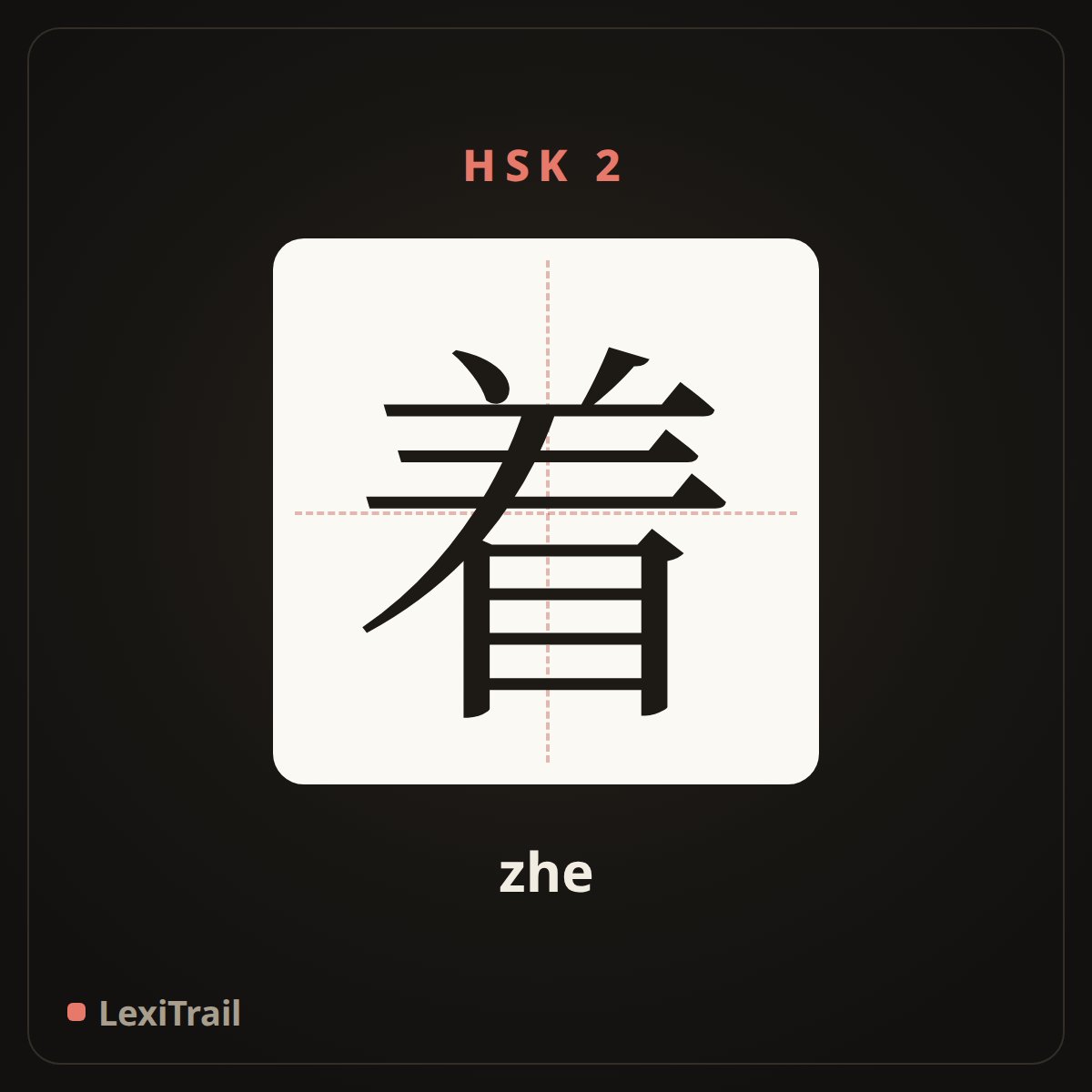
- 着
How 着 is used
着 marks ongoing action: after the verb — the action is in progress or sustained (他看着书).
Example sentences
- 它玩着球。Tā wán zhe qiú.It is playing with a ball.
- 我看着书,不说话。Wǒ kàn zhe shū, bù shuōhuà.I am reading a book without speaking.
- 他看着书。Tā kàn zhe shū.He is reading the book (in a continuous state).
- 她笑着说你好。Tā xiào zhe shuō nǐ hǎo.She smiles while saying hello to you.
Related words
着 is pronounced zhe and means “marks ongoing action”.